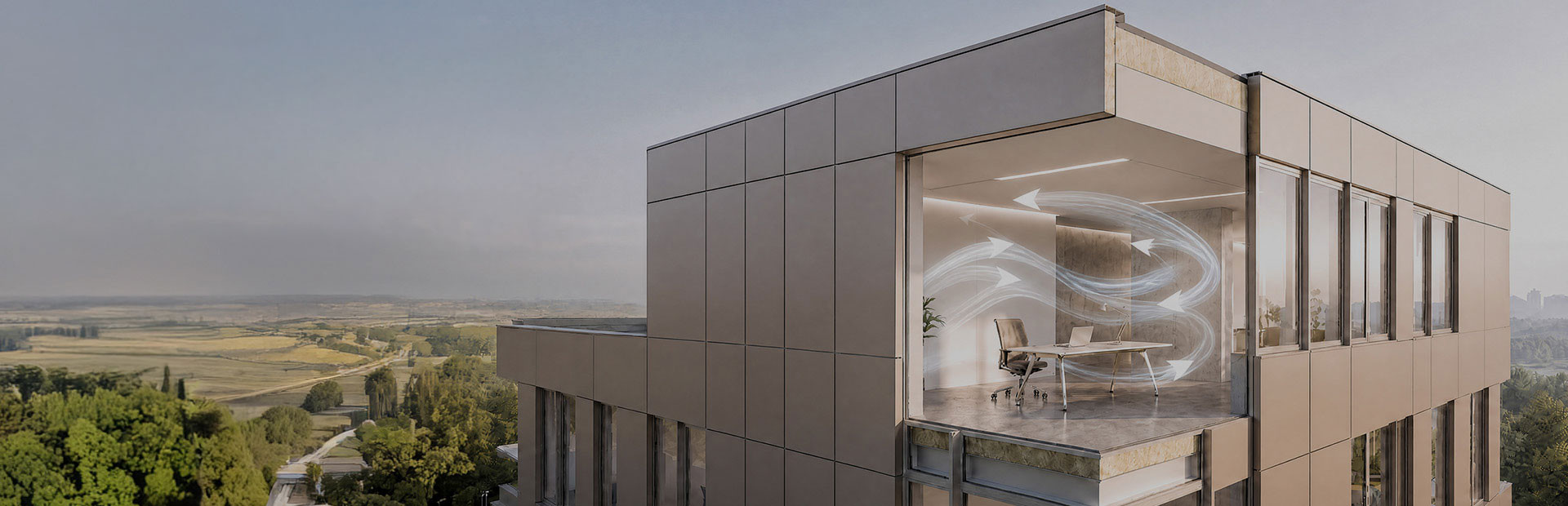
INDOOR AIR QUALITY STARTS WITH MATERIAL SELECTION
People spend most of their time indoors. As a result, indoor air quality is receiving greater attention across the construction industry.
Building materials can contribute to indoor air quality through the emissions they release into indoor environments. Many of these emissions fall within the category of volatile organic compounds (VOCs) and can originate from a wide range of construction products.
Formaldehyde is one of the most regulated substances in this category, which is why emission performance is increasingly considered in building specifications, certification schemes and project requirements.
NEW REQUIREMENTS FOR FORMALDEHYDE EMISSIONS
Requirements vary across certification schemes and project requirements.

EU formaldehyde emission limit of 80 µg/m³ applies to indoor construction products.

Greater focus on material emissions and indoor air quality during design and specification.
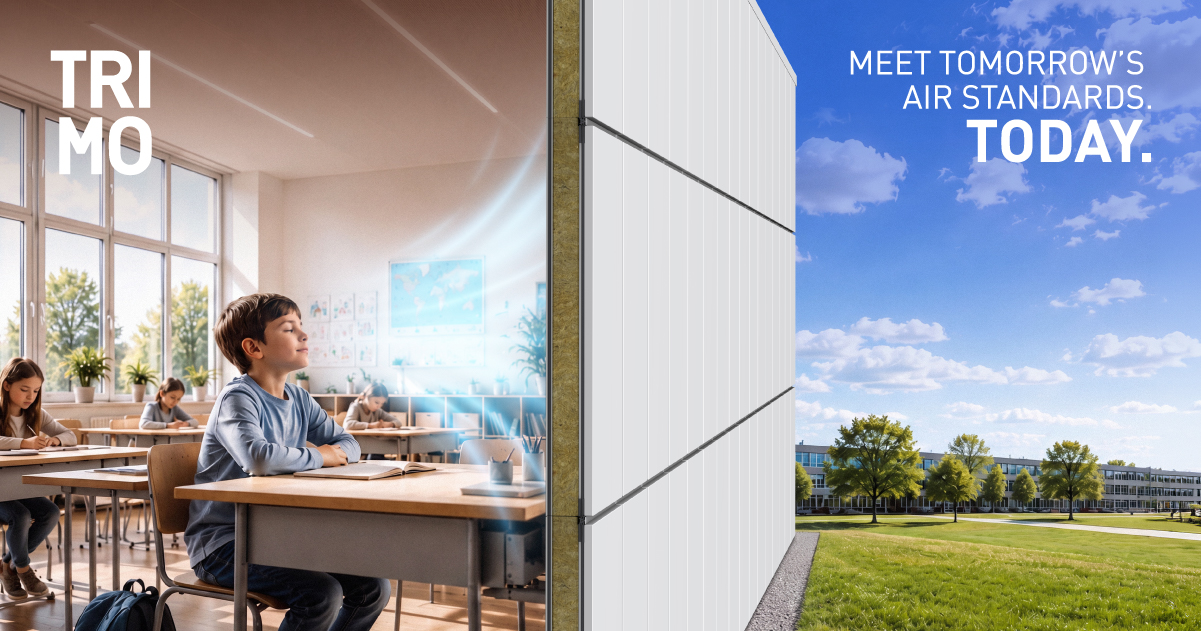
New European requirements set a formaldehyde emission limit of 80 µg/m³ for indoor construction products from August 2026.
Trimo façade and roof solutions are already compliant, contributing to indoor environments that support the comfort and wellbeing of building occupants.
PROJECT CONSIDERATIONS

Indoor air quality
Material emissions can contribute to the quality of the indoor environment.
Compliance requirements
Emission performance is becoming an important part of building specifications and project requirements.
Occupant comfort and wellbeing
Material choices can influence how people experience a building over time.
Specification confidence
Transparent emission data support more confident specification decisions.
WHERE INDOOR AIR QUALITY MATTERS MOST
Office buildings
Healthcare facilities
Education buildings
Hotels and hospitality projects
Retail and shopping centres
Residential buildings
Airports and transport hubs
Selected data centre projects
SOLUTIONS FOR LOW-EMISSION BUILDINGS
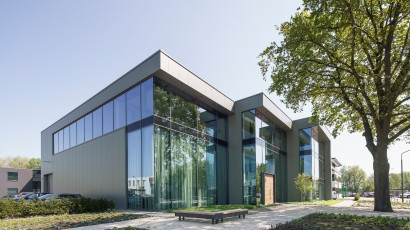
Trimoterm
High-quality, versatile and environmentally friendly fire resistant wall system.
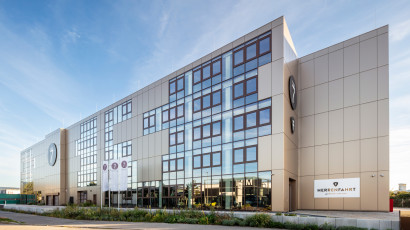
Qbiss One
Superior prefabricated architectural metal facade system that offers a through wall solution within a single piece of construction element.
Building for tomorrow’s requirements starts with the decisions made today.
FAQ
What are VOCs?
Volatile Organic Compounds (VOCs) are substances that can be released from building materials into indoor air. They are among the emissions considered when assessing indoor air quality in buildings.
What is formaldehyde?
Formaldehyde is one of the most regulated substances related to indoor air quality. European requirements set limits for formaldehyde emissions from indoor construction products.
What changes in August 2026?
From August 2026, indoor construction products placed on the European market must comply with a formaldehyde emission limit of 80 µg/m³. The new requirements create a harmonised approach to assessing formaldehyde emissions across Europe.
Which projects are affected?
The requirements apply to indoor construction products used in a wide range of building types, including commercial, educational, healthcare, residential and industrial facilities. Material emission performance is becoming an increasingly important consideration wherever indoor air quality is a project objective.
Are Trimo panels compliant?
Yes. Selected Trimo solutions have been tested according to EN 16516 and achieve formaldehyde emission values significantly below current European requirements. Certain solutions demonstrate verified emissions below 10 µg/m³.
How are VOC emissions measured?
VOC emissions are measured in laboratory test chambers that simulate indoor conditions. The tests assess substances released from construction products into indoor air and provide comparable emission performance data.
LEARN MORE
Discover solutions designed for low-emission buildings.